
Home » Mask Fit Testing
Mask Fit Testing NSW
On-site respirator fit testing. Fast and fully compliant.
Real protection starts with the right fit
Respiratory protective equipment (RPE) is a legal requirement for workers in high-risk industries, particularly those exposed to silica dust. To ensure RPE fits correctly and offers workers the intended level of protection, workers must be fit tested before first use and every 12 months afterwards.
At Munro Respiratory Services, our experienced fit testers make this health and safety process straightforward. Your team will be tested, certified and back to work with minimal disruption, and we’ll remind you when your next test is due.
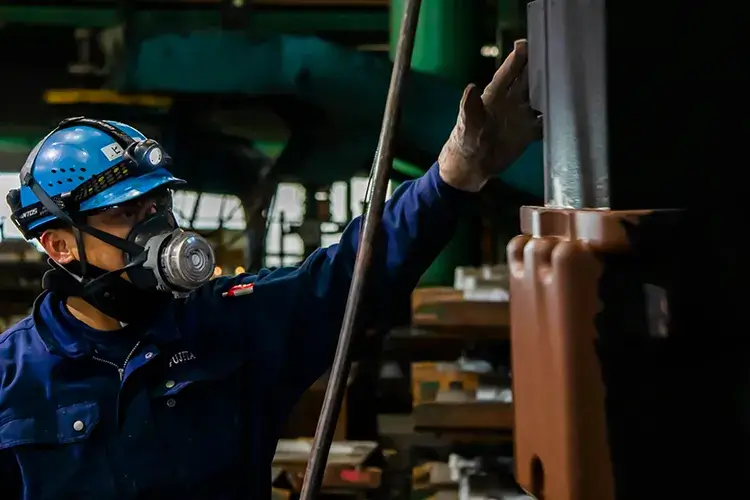
We provide respirator fit testing to a range of industries
There are many industries where workers are exposed to silica dust and other high-risk airborne contaminants.
At Munro Respiratory Services, we are experienced in conducting fit testing across all of them, including but not limited to:
- Mining
- Drilling
- Quarrying
- Tunneling
- Construction
- Demolition
- Stone masonry
- Stone fabrication
- Hydraulic fracturing
- Exploration
- Manufacturing
- Foundries
Plus any industries where workers are exposed to hazardous airborne contaminants e.g. healthcare, farming and agriculture.
Qualitative vs quantitative mask fit testing
We offer two types of fit testing, qualitative (QLFT) and quantitative (QNFT). A qualitative fit test is a pass/fail test using a bitter-tasting agent, and is used for disposable and reusable half-face respirators only..A quantitative test uses our AccuFit 9000 Pro to measure particle concentration and produce a precise fit factor score, and is used for half and full-face respirators. Our fit testers can advise on the right option for your team.
Our fit test process, qualitative fit testing (QLFT)
QLFT is a pass/fail test that assesses the user with a test agent, usually a bitter-tasting substance. This is used for disposable or reusable half-face respirators, but not full face respirators.
At Munro Respiratory Services, our experienced fit testers guide workers through the process step by step.
1. Fitting the mask
The user is instructed to put on the respirator and adjust it to fit their face. Education is provided on performing fit checks.
2. Testing the seal
The user is instructed to perform a series of exercises, such as talking, nodding, or moving the head, to simulate normal workplace movement and verify compliance with industry regulations.
3. Certification
Once the test is complete and the respirator has passed, a fit test card and report is issued to your team.
The quantitative fit testing (QNFT) process
QNFT uses specialised particle counting equipment to measure how much outside air leaks into the respirator, giving a precise, numerical pass or fail result. This method is used for half-face and full-face respirators. At Munro Respiratory Services, we conduct QNFT using the AccuFit 9000 Pro, so your team gets a fast, accurate result they can rely on.
1. Fitting the mask
The user is instructed to put on the respirator and adjust it to fit their face. Education is provided on performing fit checks.
2. Measuring the fit
The AccuFit 9000 Pro measures particle concentration inside and outside the mask, generating a fit factor score for each exercise performed.
3. Certification
Once the test is complete and the respirator has passed, a fit test card and report is issued to your team.
Does your team need a fit test?
Book with us today, and we’ll take care of the rest.
Fit testing without the hassle
We make our fit testing fast, reliable and affordable, so your team stays protected, and your business stays compliant without unnecessary disruption.
Delivery
All fit-testing is conducted on-site.
Duration
Each fit test takes approximately 15 minutes per person.
Pricing
From $100 per person excl. GST Travel costs incurred for face-to-face training are quoted separately
Frequent mask fit testing questions
Does fit testing apply to workers who are near silica dust, not just those handling it?
Yes. Under the NSW WHS Regulation, fit testing is required for any worker who may be exposed to silica dust and rely on tight-fitting respiratory protection, whether they are directly involved in processing or simply working in proximity to it.
What happens if a respirator does not fit correctly?
If a respirator does not form a correctseal around the wearer’s face, contaminated air can bypass the filter and enter through gaps in the face seal. Fit testing is the only reliable way to confirm a respirator is providing adequate protection.
What are the health risks of wearing a respirator that does not fit correctly?
Do workers need to be clean-shaven for a fit test?
Facial hair that sits between the respirator and the face can prevent a proper seal. Workers should be clean-shaven in the areas where the respirator makes contact. If facial hair cannot be removed, a different style or model may need to be considered. Our fit testers can advise.
What is quantitative fit testing?
Quantitative fit testing (QNFT) uses specialised equipment to measure how well a respirator fits and provide a numerical fit factor. The result is compared against the minimum fit factor required for the type of respirator being tested to determine whether the fit passes or fails.
When does a worker need to be retested?
Fit testing is required before first use and every 12 months after. You will need repeat fit testing if you change to a new style of respirator. Re-testing may also be required if a worker experiences significant physical changes that could affect respirator fit, such as substantial weight gain or loss, dental work or facial surgery. If you are unsure, get in touch, and we can advise.
How will I know when my team is due for retesting?
We take care of that for you. Once your team has been tested, we send automated reminders when their next annual fit test is due, so your compliance never lapses.
Do you offer deals for larger groups?
Yes, we offer discounted rates for groups. Check out our website for our rates and to find out more.
When can I book a fit test?
Fit testing is available during standard business hoursGet in touch to check availability and arrange a time that suits your team.
Does a workplace risk assessment determine whether respiratory protection is required?
Yes. A risk assessment identifies hazards like silica dust, estimates how much workers could be exposed to, and decides which controls are needed. Respirators are the last line of defence, used after other controls like water suppression or dust extraction. For high-risk silica work in NSW, the assessment also feeds into your silica risk control plan. If workers are required to wear tight-fitting respirators as part of the risk assessments, SafeWork NSW expects them to be fit tested.
What are positive and negative pressure seal checks?
Positive and negative pressure seal checks, or also known as a ‘fit check’, is a quick self-assessment the wearer does every time the respirator is donned to ensure no air is leaking between the mask and the user’s face. It differs from a fit test, which is a formal test conducted by a trained professional using qualitative and quantitative methods.
Where do you do respiratory fit testing?
We offer mask fit testing in Sydney and the rest of NSW. We are a fully mobile service and come to your site to ensure minimal disruption to workflow.
Why choose Munro Respiratory Services?
Digital delivery
Fit test cards and reports are issued quickly and delivered digitally, so your team has what they need when they need it.
Automated reminders
We organise automated reminders for your team's next fit test, so you never miss a retest, and your compliance never lapses.
Experienced and compliant
Our fit testers are qualified and competent, and come from clinical industry specific backgrounds, so you can be confident in their assessments.
Ready to get your team ensure respiratory protection for your workplace?
A secure, tight-fitting respirator is about more than compliance; it’s about keeping your workers safe. If your team is due for a fit test, book with Munro Respiratory Services today, our qualified fit testers will handle everything.