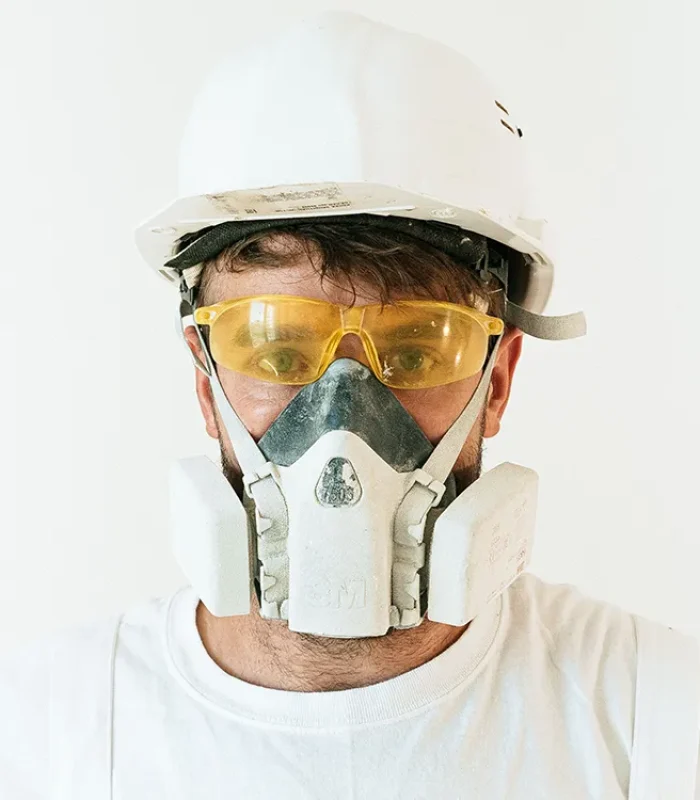
Silicosis is an irreversible lung disease caused by inhaling respirable crystalline silica dust. It causes inflammation and permanent scarring of lung tissue, making it progressively harder to breathe. There is currently no cure.
The good news is that it is entirely preventable, and NSW law now requires employers in high-risk industries to take concrete steps to prevent it.
This article explains what silicosis is, how the three types differ, what symptoms to look out for, and what NSW businesses are required to do to protect their workers.
What causes silicosis?
The three types of silicosis
What are the symptoms of silicosis?
Who is at risk in NSW?
Is silicosis curable?
How silicosis is prevented in NSW workplaces
Frequently asked questions
Book on-site fit testing and silica training for your NSW team
A summary of what silicosis isSilicosis is an irreversible lung disease caused by inhaling respirable crystalline silica dust. There is no cure, but it is entirely preventable.
|
What causes silicosis?
Silicosis is caused by inhaling respirable crystalline silica (RCS), a fine dust generated when silica-containing materials are cut, drilled, ground, or polished. Once silica particles reach the lungs, the body cannot clear them. Over time, the immune response causes inflammation and scarring that permanently reduces lung function.
Silica is found in rock, sand, soil, concrete, brick, and many construction materials.
Common work activities that generate dangerous silica dust include:
- Cutting, grinding, or drilling natural or engineered stone
- Excavation, tunnelling, and earth-moving operations
- Mining, quarrying, and mineral ore processing
- Concrete or brick cutting, particularly using dry methods
- Abrasive blasting, foundry casting, and angle grinding
- Hydraulic fracturing of gas and oil wells
According to Safe Work Australia,engineered stone can contain up to 97% crystalline silica, compared to 25-40% in granite. That high concentration is what made engineered stone particularly dangerous, and why it was banned from manufacture, supply, processing, and installation in Australia from 1 July 2024.
The three types of silicosis
Silicosis is not a single condition. How quickly it develops depends on the concentration of silica dust inhaled and the length of exposure. According to Safe Work Australia,there are three distinct forms: acute, accelerated, and chronic silicosis.
Chronic silicosis
Chronic silicosis develops after long-term exposure to lower levels of silica dust and can lead to fibrotic nodules, shortness of breath, and progressive massive fibrosis. It typically takes more than 10 years to develop and is the most common form. Symptoms may not appear for decades.
Accelerated silicosis
Accelerated silicosis can develop after exposures of 3 to 10 years to moderate to high levels of silica dust. It causes inflammation fluid overload, protein build-up in the lung, and scarring of lung tissue. This form has become significantly more common in recent years due to widespread work on silica-heavy materials. The Royal Australasian College of Physicians notes that there is currently no known treatment to arrest its progression, apart from lung transplantation.
Acute silicosis
Acute silicosis can develop after short exposure to very high levels of silica dust, within weeks or years, causing severe inflammation and scarring in the lung. It is the rarest form but progresses rapidly and can be fatal.
What are the symptoms of silicosis?
One of the most dangerous aspects of silicosis is that early-stage disease produces no noticeable symptoms. By the time symptoms appear, significant and irreversible lung damage may already have occurred. Symptoms also continue to worsen even after exposure has stopped.
Early symptoms include shortness of breath after physical activity and a harsh, dry cough. As the disease progresses, increasing breathlessness develops.
In advanced silicosis, workers may have trouble sleeping, experience a productive cough, and notice loss of appetite and weight loss.
A full symptom picture across disease stages includes:
- Persistent dry cough
- Shortness of breath, initially on exertion, later at rest
- Fatigue and reduced capacity for physical activity
- Chest tightness or wheezing
- Frequent chest infections
- Difficulty sleeping
- Loss of appetite and weight loss
Eventually, everyday activities such as walking or climbing stairs can become difficult.
Because early silicosis produces no symptoms, health monitoring for workers in high-risk roles is not optional. It is a legal requirement under NSW WHS Regulation.
Who is at risk in NSW?
Any NSW worker who processes or works in proximity to high-risk crystalline silica substances is at risk. This applies across a wide range of industries, not just engineered stone fabrication.
According to silicosis.org.au, an estimated 600,000 people in Australia are exposed to silica dust in the workplace each year, and 250 Australians each year develop lung cancer due to silica exposure.
The scale of the problem in NSW is significant. According to SafeWork NSW, there have been 516 cases of silicosis and 36 deaths due to the disease in NSW since 2017.
Industries with elevated risk include:
- Mining, drilling, quarrying, and exploration
- Construction, demolition, and tunnelling
- Stone masonry and stone fabrication
- Hydraulic fracturing
- Foundry work and manufacturing
Is silicosis curable?
Silicosis cannot be cured. The lung damage caused by silicosis is permanent and cannot be reversed. Treatment focuses on managing symptoms, slowing progression, and reducing the risk of complications such as infection and further lung disease.
Lung Foundation Australia notes that while there is no cure,there are ways to manage symptoms and slow the disease’s progress. Options may include inhaled medications, anti-fibrotic therapy, and in severe cases, lung transplantation assessment. Vaccination against respiratory infections such as influenza and pneumonia is also recommended for anyone living with silicosis.
Early detection improves outcomes. Because symptoms may develop slowly even without further exposure, early detection of silicosis is vital. Health monitoring for at-risk workers is strongly recommended and may be required under NSW WHS Regulation.
| “Silicosis is one of the most preventable occupational diseases we have, and yet we are still seeing workers diagnosed because the right protections were not in place. By the time symptoms appear, the damage is already done. That is why health monitoring, training and fit testing matter before exposure happens, not after.” Kate O’Connor |
How silicosis is prevented in NSW workplaces
Silicosis is entirely preventable. NSW law now mandates that employers and workers in high-risk industries take specific steps to reduce exposure and ensure workers are protected.
Since 1 September 2024, two requirements have been in effect under the NSW Work Health and Safety Regulation:
Silica awareness training is mandatory for any worker involved in the processing of a high-risk crystalline silica substance, or at risk of exposure. Training must cover all 11 criteria specified by SafeWork NSW, including health risks, respiratory protective equipment (RPE), and workplace obligations.
Respiratory fit testing is required before first use of a respirator and every 12 months after. Fit testing confirms that the respirator forms a proper seal on each individual worker’s face.
At Munro Respiratory Services, we deliver both services to teams across NSW. Based in Central West NSW, our trainers and fit testers have direct industry experience in mining, exploration, and construction. We understand the working conditions your teams face because we have worked in them.
For teams that need to meet both requirements, we can deliver silica awareness training and respiratory fit testing on the same day, on-site, with certificates and training records issued on completion.
If you want to confirm your obligations or get your team tested and trained, our silica awareness training and respiratory fit testing pages set out exactly what is involved.
Frequently asked questions
Can you get silicosis after a single exposure to silica dust?
A single brief exposure is unlikely to cause silicosis. The disease typically develops after repeated or prolonged exposure to silica dust over months or years. However, acute silicosis can develop after short-term exposure to extremely high concentrations of silica dust, which is why controlling exposure from the start of any high-risk work is essential.
How is silicosis diagnosed?
There is not a single test for a silicosis diagnosis. Diagnosis typically involves a range of tests, and your GP will likely refer you to a respiratory physician. High-resolution computed tomography (HRCT) scanning is the most accurate imaging method to detect lung tissue damage.
Do silicosis symptoms go away if you stop working with silica dust?
No. Silicosis symptoms continue to worsen over time, even after a person stops being exposed to silica dust. This makes early detection and prevention far more important than managing symptoms after the fact.
Is silicosis the only health risk from silica dust exposure?
No. According to Safe Work Australia, silica dust exposure can also cause chronic bronchitis, emphysema, lung cancer, kidney damage, and scleroderma, a connective tissue disease that causes scarring in the skin and joints.
How often does fit testing need to happen?
Under NSW WHS Regulation, respiratory fit testing is required before a worker first uses a respirator and every 12 months after. Retesting may also be needed if a worker experiences physical changes that could affect how the respirator fits. Munro Respiratory Services sends automated reminders ahead of each annual retest so compliance does not lapse.
What is the difference between a fit test and a fit check?
A fit check is a quick check carried out by the worker each time they put on a respirator to confirm it feels secure. A fit test is a formal test conducted by an accredited tester, using a test agent, to verify that the respirator forms an adequate seal on that specific worker’s face. Fit tests are a legal requirement; fit checks alone are not sufficient to meet NSW compliance obligations.
Book on-site fit testing and silica training for your NSW team
Silica exposure is a serious and growing risk for NSW workers across many industries. If your team processes crystalline silica substances and has not yet completed fit testing or silica awareness training, Munro Respiratory Services can help. Book on-site testing and training across NSW, or get in touch to confirm what applies to your business.